cctm collettivo culturale tuttomondo MOCA – Museo Omegnese del Casalingo
MOCA – Museo Omegnese del Casalingo
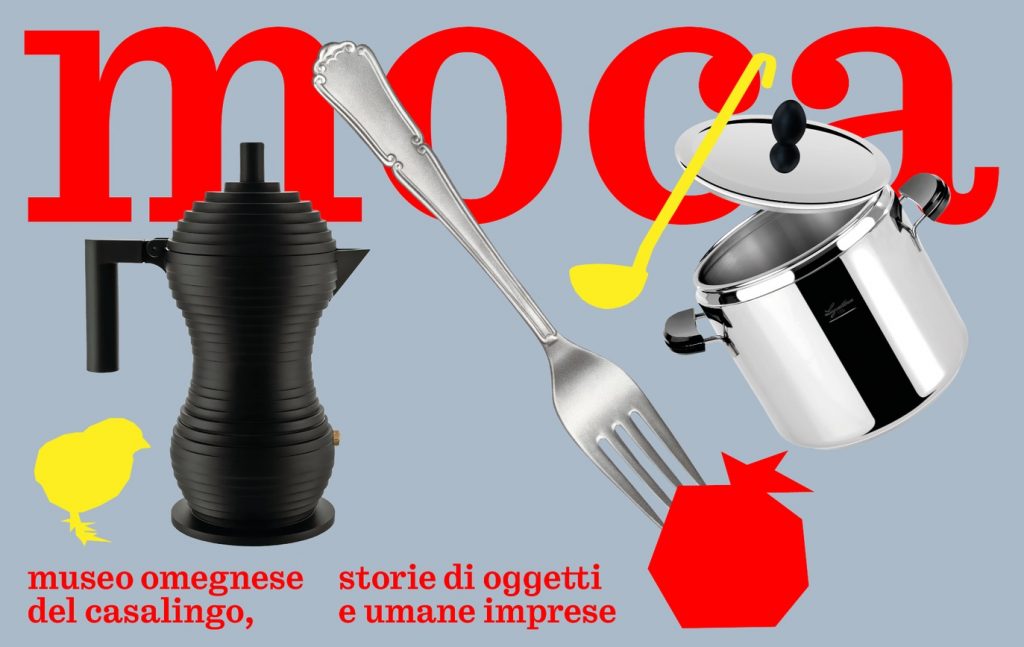
Omegna è una delle città italiane più rilevanti nel panorama industriale del casalingo. Qui hanno avuto origine e si sono affermate a livello mondiale aziende come Alessi, Calderoni, Girmi, La Nuova Faro, Irmel, Tracanzan, Piazza. È la città della Moka Bialetti, e quella dove è stata inventata la pentola a pressione Lagostina, e anche dove ha preso il via l’avventura della Pastaiola.
Per preservare e valorizzare questo straordinario patrimonio industriale e culturale, il MOCA – Museo Omegnese del Casalingo ospita un “archivio aperto” che raccoglie e racconta l’evoluzione del settore attraverso un regesto di prodotti iconici, materiali d’archivio e documenti delle aziende storiche del territorio.
L’Archivio è concepito come un archivio aperto, quindi accessibile e fruibile, ma anche in divenire, in cui i visitatori possono esplorare da vicino gli oggetti, comprendendone il design, l’ingegneria e l’impatto sulla vita quotidiana. Un percorso che non si limita a esporre prodotti, ma ne evidenzia il contesto industriale, le strategie di comunicazione e le innovazioni tecnologiche che hanno contribuito a scrivere la storia del casalingo mondiale.
I materiali esposti offrono uno sguardo inedito su aziende protagoniste di questo settore, svelando aspetti poco conosciuti e avvicinando il pubblico a una storia fatta di ingegno, industria e cultura.
L’archivio, insieme alla sala immersiva digitale, fa del MOCA un luogo vivo, in cui passato e futuro si intrecciano per raccontare la creatività e il saper fare che hanno reso Omegna un punto di riferimento internazionale.
MOCA – Museo Omegnese del Casalingo, Parco Pasquale Maulini, 1, Omegna (VB)

An Open Archive of Italian Design, Industry and Ingenuity
Omegna holds a unique place in the history of Italy’s household goods industry. For generations, the town has been a fertile ground for design, manufacturing and technological innovation, giving rise to companies that would go on to achieve international recognition, including Alessi, Calderoni, Girmi, La Nuova Faro, Irmel, Tracanzan and Piazza. Omegna is also the birthplace of the iconic Bialetti Moka, the place where the Lagostina pressure cooker was invented, and where the story of Pastaiola began.
This extraordinary industrial heritage is at the heart of the MOCA – Museo Omegnese del Casalingo, which preserves, interprets and brings to life the history of a territory that has played a remarkable role in shaping the world of household design.
At the centre of the museum is the Open Archive, an evolving collection that brings together iconic objects, archival materials and documents from the historic companies of the region. Rather than presenting the past as something fixed and distant, the Archive offers an open and accessible way of engaging with it—one that continues to grow, develop and invite new perspectives.
Visitors are encouraged to encounter the objects at close range and to discover the stories embedded within them: their design, engineering, materials and relationship with everyday life. The collection goes beyond the objects themselves, placing them within the broader context of industrial production, design culture, communication and technological innovation. In doing so, it reveals how seemingly familiar household products became part of a much larger story—one that helped shape the history of Italian design and the global household goods industry.
The materials on display offer new perspectives on the companies and people who made this history possible, bringing to light lesser-known stories, processes and ideas. Together, they tell a story of ingenuity and enterprise, of manufacturing expertise and creative vision, and of the profound relationship between industry and culture.
The Open Archive is complemented by the museum’s immersive digital experience, creating a dynamic environment in which historical memory and contemporary technology come together. Here, the past is not simply preserved: it is reinterpreted, experienced and brought into dialogue with the future.
MOCA is therefore more than a museum of objects. It is a living cultural space dedicated to the creativity, knowledge and making that have defined Omegna’s identity and established the town as an international reference point for Italian design and household innovation.
_
