cctm collettivo culturale tuttomondo Maria Lai (Italy)
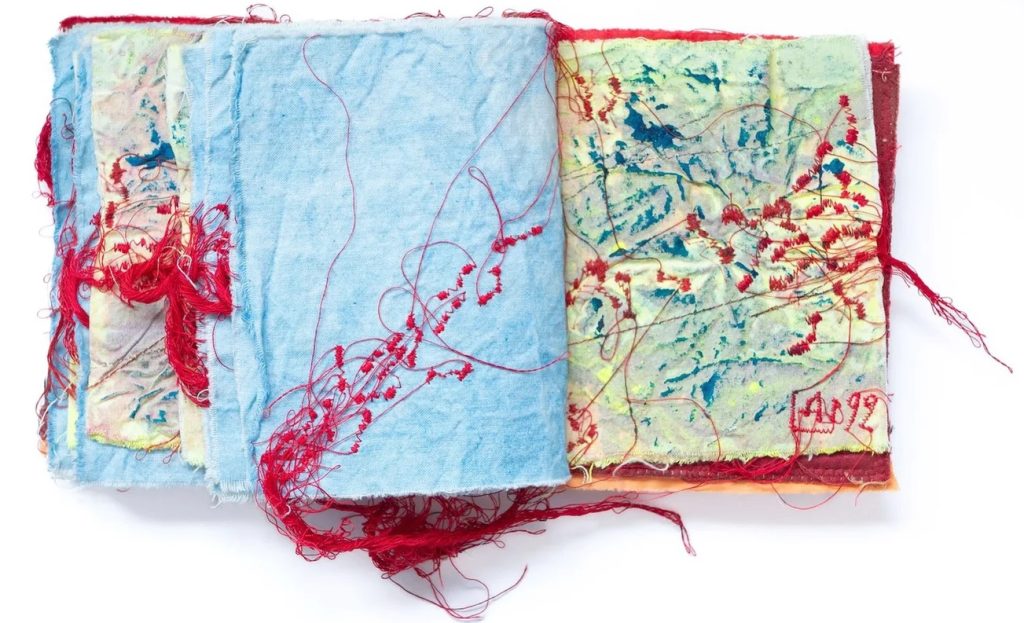
opera: Maria Lai, 1992

Maria Lai (Ulassai, 1919 – Cardedu, 2013) è una nota artista conosciuta soprattutto per le sue opere tessili, definita dal critico Giorgio Di Genova come una poetica amanuense del cucito.
La sua tecnica artistica, infatti, ruota intorno all’uso di materie tessili che rimandano al passato della sua terra e alle antiche tradizioni della Sardegna.
La sua arte è collegata a elementi quali tradizione, scarto, tessitura. L’opera dell’artista più rappresentativa e nota è Legarsi alla montagna (1981), manifestazione artistica tenutasi a Ulassai nel 1981 lungo un arco di tempo di tre giorni.
La sua storia e la sua persona rappresentano un simbolo di emancipazione femminile in quanto è stata in grado di trasformare quel che sarebbe dovuto essere l’ordinario (come il lavoro al telaio o in cucina) nella sua arte, riuscendo così ad evadere da un futuro già scritto.
Parlando della sua vita ha affermato: “Io fin da bambina avevo sempre bisogno di sfuggire di casa e mi si guardava con un’interrogazione: ‘Non ti amiamo abbastanza? Perché stai sempre lontana? Perché ti nascondi sempre?’ Io amavo molto stare sola, nascosta, e mi dicevano: ‘Ma cosa fai?’ E io ascoltavo il silenzio. Mi sembrava bellissimo. Però naturalmente mi sentivo diversa, mi sentivo sempre un po’ accusata, mi pareva di tradire sempre chi mi amava. E sempre ho avuto il bisogno di creare distanze tra chi mi ama e me. Non sopporto di essere amata più di tanto. Il vero amore è quello che mi dava mio padre aiutandomi a essere libera anche essendo preoccupatissimo per me”.
Seppur vicina al gruppo Informale, grazie ad alcune tematiche in comune, Maria Lai non prende parti e agisce da sola con un bagaglio di esperienze e di vissuto tutto singolare, impossibile da associare a qualsiasi movimento. Nelle sue opere Maria Lai parla di se e del lavoro femminile della sua terra.
Maria Elvira Ciusa, sua ex collaboratrice, a riguardo ha dichiarato: “Il mondo delle arti, quando esordì, era dominato dagli uomini…Maria Lai veniva assalita dallo sconforto di dover continuare a lottare e trovarsi a vivere all’ombra dei suoi compagni di strada, coi quali aveva condiviso negli anni Sessanta i nuovi linguaggi dell’arte, di artisti come Pino Pascali, Jannis Kounellis, Piero Manzoni e Alighiero Boetti”.
Maria Lai (Ulassai, 1919 – Cardedu, 2013) was a renowned Italian artist best known for her textile works, which the critic Giorgio Di Genova described as embodying a poetic, amanuensis-like approach to sewing.
Her artistic practice centred on textile materials that evoke the history of her homeland and the ancient traditions of Sardinia. Her work explores themes such as tradition, discarded materials, and weaving. Her most iconic and widely recognised work is Legarsi alla montagna (Tying Oneself to the Mountain, 1981), a participatory art event that took place in Ulassai in 1981 over the course of three days.
Her life and personal story have come to symbolise female emancipation. She was able to transform activities traditionally associated with women’s everyday lives, such as weaving at the loom and cooking, into artistic expression, thereby breaking free from a future that had seemingly already been predetermined for her.
Reflecting on her life, she once stated:
“Ever since I was a little girl, I had always felt the need to escape from home, and people would look at me with a questioning expression: ‘Don’t we love you enough? Why are you always away? Why do you always hide?’ I loved being alone, hidden away, and they would ask me, ‘But what are you doing?’ And I would listen to the silence. It seemed so beautiful to me. Naturally, however, I felt different; I always felt somewhat reproached, as though I were constantly betraying those who loved me. I have always felt the need to create distance between myself and those who love me. I cannot bear to be loved too much. True love was what my father gave me when he helped me to be free, even though he was deeply worried about me.”
Although Maria Lai shared certain thematic affinities with the Informal art movement, she never fully aligned herself with any particular artistic group. Instead, she pursued an independent path, drawing on a distinctive body of personal experiences and memories that made her work difficult to associate with any single movement. Through her art, Lai explored both her own identity and the experience of women’s work in her homeland.
Maria Elvira Ciusa, a former collaborator of the artist, offered the following reflection:
“When Maria Lai first emerged on the art scene, the art world was dominated by men… Maria Lai was often overcome by the discouragement of having to continue fighting, while finding herself living in the shadow of her fellow artists. During the 1960s, she had shared with them the exploration of new artistic languages, alongside artists such as Pino Pascali, Jannis Kounellis, Piero Manzoni, and Alighiero Boetti.”
_
