cctm collettivo culturale tuttomondo Franca Baratti (Italia)
Franca Baratti (Castelponzone, 1925 – Cremona, 2018) è stata una pittrice italiana.
A 15 anni si iscrive al Liceo Artistico di Brera a Milano, dove studia sotto la guida di maestri insigni, tra cui Eva Tea. Tra i suoi compagni di studi figurano artisti destinati a grande notorietà come Roberto Crippa, Gianni Dova e Alik Cavaliere.
Nel 1946 si iscrive all’Accademia di Brera, ma non conclude gli studi accademici. Nonostante la pittura fosse la sua vocazione primaria, studia anche scultura con Francesco Messina, da cui apprende il gusto per la materia e per i volumi.
Nel 1965, incoraggiata da Eva Tea, Elda Fezzi e Fiamma Vigo (scopritrice di talenti dell’avanguardia e titolare di gallerie d’arte), inizia un’intensa attività espositiva. Da metà anni ’60 espone in collettive e personali in tutta Italia, in numerosi paesi europei e anche negli Stati Uniti.
Dal 1973 in avanti realizza varie mostre a carattere pubblico presso musei ed enti culturali in Italia e all’estero, affermandosi con successo anche nelle più prestigiose fiere internazionali.
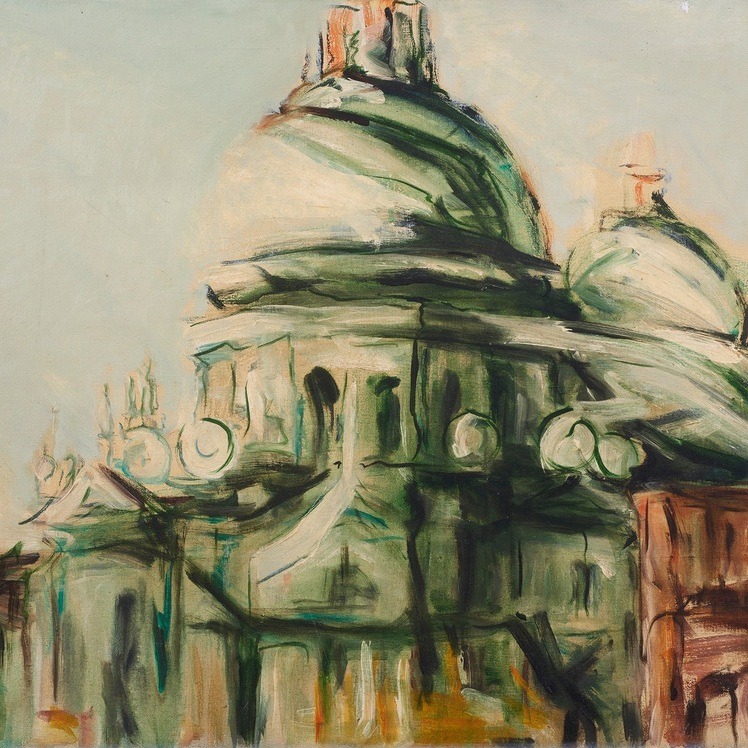
opera: Franca Baratti, Senza titolo (Venezia, La Salute), 1967 – collezione privata

Franca Baratti (Castelponzone, 1925 – Cremona, 2018) was an Italian painter whose practice developed within the cultural and artistic milieu of post-war Milan and subsequently gained an international exhibition profile.
Her artistic education began at the Brera Art School in Milan, which she entered at the age of fifteen. There, under the guidance of distinguished teachers including Eva Tea, she encountered an important generation of emerging Italian artists, among them Roberto Crippa, Gianni Dova, and Alik Cavaliere. In 1946, she continued her studies at the Brera Academy, although she did not complete the academic course.
Alongside painting, which remained central to her artistic practice, Baratti pursued sculpture under Francesco Messina. This parallel engagement with sculpture contributed to a sustained attention to materiality, volume, and the physical articulation of form—elements that would remain significant within her artistic language.
A decisive phase in Baratti’s public career began in 1965, when, with the encouragement of Eva Tea, Elda Fezzi, and Fiamma Vigo, she entered a period of intensive exhibition activity. Vigo, in particular, was a significant presence within the Italian avant-garde milieu, both as a promoter of emerging artists and through her work as a gallery owner. From the mid-1960s, Baratti’s work was presented in solo and group exhibitions across Italy and increasingly in international contexts, including numerous European countries and the United States.
From 1973 onward, her exhibition activity extended to museums and cultural institutions in Italy and abroad, further establishing the international dimension of her practice. Her participation in leading international art fairs contributed to the broader recognition and circulation of her work, situating Baratti within the wider landscape of post-war and contemporary Italian art.
_
cctm collettivo culturale tuttomondo Franca Baratti (Italia)
